
After the release of the relevant notice on the replacement of old locomotives with new ones, while various places actively implemented the spirit of the meeting, the industry also set off a wave of “replacing old locomotives with new ones”. Recently, the replacement of railway locomotive equipment has also ushered in new development opportunities.
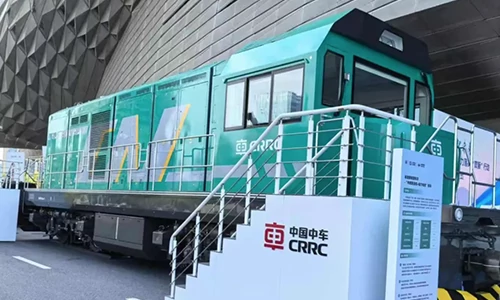
As a specific action of the railway industry to implement the Party Central Committee’s promotion of large-scale equipment renewal, it is an important measure to promote the green and low-carbon transformation of railway equipment and the development of the new energy railway equipment industry.
Encourage the application of new energy locomotives
As old railway diesel locomotives are about to withdraw from the market, locomotive renewal has become a top priority.
Railway equipment companies should take measures to promote the economical and intensive production of railway transportation, green and low-carbon development, and actively promote the green and low-carbon transformation and renewal of railway locomotives; equipment design and manufacturing companies should actively carry out safer, more efficient and green railway locomotive technology research and pedigree research, and support the renewal and quality improvement of railway locomotives with technological innovation.
It is necessary to guide railway equipment companies to carry out technical research and pedigree research on new energy railway locomotives as green alternative products for old railway diesel locomotives. Active and effective measures shall be taken to support new energy railway locomotives that adopt new technologies, new processes and new materials and do not have corresponding national standards or industry standards.
The relevant national departments shall promote the introduction of relevant policies for the promotion and application of new energy railway locomotives, and include new energy railway locomotives in the national macro-support policies; promote the inclusion of new energy railway locomotives in the national carbon emission trading market for carbon reduction.
Railway transportation enterprises shall, on the premise of ensuring safety, organize the formulation of scientific and reasonable technical conditions for the online operation assessment and over-track transportation of new energy railway locomotives, provide necessary test conditions and transportation routes for new energy railway locomotives; encourage and support relevant railway enterprises to purchase or promote the application of new energy railway locomotives through leasing models.
The so-called old railway diesel locomotives include railway DC transmission diesel locomotives and hydraulic transmission diesel locomotives. New energy railway locomotives include new railway locomotives that use non-traditional power systems such as power batteries, hydrogen fuel cells, low-carbon/zero-carbon engines, or hybrid power systems combined with diesel generator sets as the complete or main traction power energy source to achieve green and low-carbon goals.
As for the number of old diesel locomotives in the current national railway system, DC transmission diesel locomotives and hydraulic transmission diesel locomotives account for less than 10% of the total railway.
At present, diesel locomotives are mainly used on railway lines that are not covered by electrification, such as the Qinghai-Tibet Railway; they are also used in the field of shunting. Because diesel locomotives carry their own fuel, do not rely on contact networks for operation, have strong adaptability to extreme environments, and have irreplaceable advantages, diesel locomotives must be used in a certain proportion throughout the railway. “At present, it is unrealistic and impossible to completely eliminate diesel locomotives.”
Promote the quality and efficiency of the industry
Regarding the carbon reduction and green characteristics of new energy locomotives, compared with traditional internal combustion locomotives, CRRC’s series of new energy locomotives have achieved a comprehensive reduction in pollutant emissions. The “internal combustion engine + power battery” locomotive has achieved a 45% reduction in nitrogen oxide emissions, a 73% reduction in hydrocarbon emissions, and an 83% reduction in carbon monoxide emissions. According to the calculation of a 45% reduction in pollutant emissions, one locomotive can emit 4 tons less harmful substances per year and reduce carbon emissions by 374 tons.
In response to this policy, OCET decided to cooperate with EMAC. As for EMAC, we do not regard work as a job, but rather regard struggle as our lifelong career. We are well aware that integrity is the foundation of our survival. Integrity has allowed us to grow continuously in the past 12 years. We are well aware that only a steady stream of water can last for a long time.


